
Vine leaves: Preservation and proper storage
ARGIRO BARBARIGOU

May is the right month to harvest vine leaves!
From mid-April and all through May, vine leaves are in abundance. If you preserve them properly during this brief window when we find them at markets or vineyards, you’ll be able to make baked dolmades or yialantzi dolmades all year long. You can find vine leaves at farmers’ markets already cut, but if you cut them yourself from a vineyard, it’s essential to make sure the vineyard hasn’t recently been sprayed with pesticides. The best vine leaves, both in flavor and appearance, come from sultana grape vines, perfect for making the most beautiful recipes and enjoying them year-round. They are finer in texture, almost silky, with delicate veins to the touch, and very tender. Together we’ll go through the ways you can preserve them. All you have to do is choose: bottle, jar, or food bag.

How to choose them and how to cut them
It’s best to cut 2, or at most 3 leaves from each vine shoot, taking those that grow after the third leaf, counted from the tip of the shoot. Choose your vine leaves carefully. They should be light green in color, neither too small nor too large, and absolutely tender, without too many “veins.” Also be careful not to damage the vine’s blossoms.
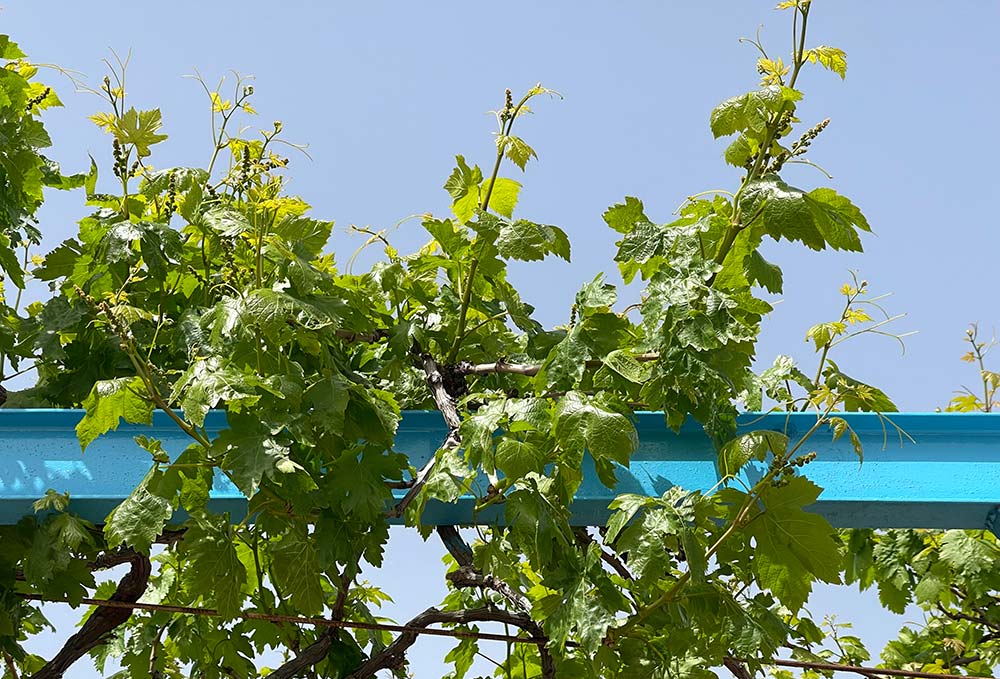
As you cut the leaves, stack them one on top of the other so you can transport them without crumpling or breaking them.
Prepare the leaves for use, storage, and preservation by trimming the stem close to the base of the leaf with small scissors, right at the point where it begins.
Preservation
There are several ways to store, preserve, and properly maintain them. Whichever method you choose, remember that it’s important to divide the vine leaves into groups, with each group containing the amount you’d use for a single cooking session.
1. Vine leaves in a plastic bottle
The first thing to do is to get one or more plastic bottles, which you have thoroughly cleaned beforehand and made sure are completely dry on the inside. The vine leaves must be completely dry too. Any trace of moisture will be disastrous for their preservation.
Next, place the leaves one on top of the other in stacks of 5 or 10 and roll them tightly into a small bundle. This bundle goes inside the bottle. Make sure each bundle fits through the bottle’s mouth.
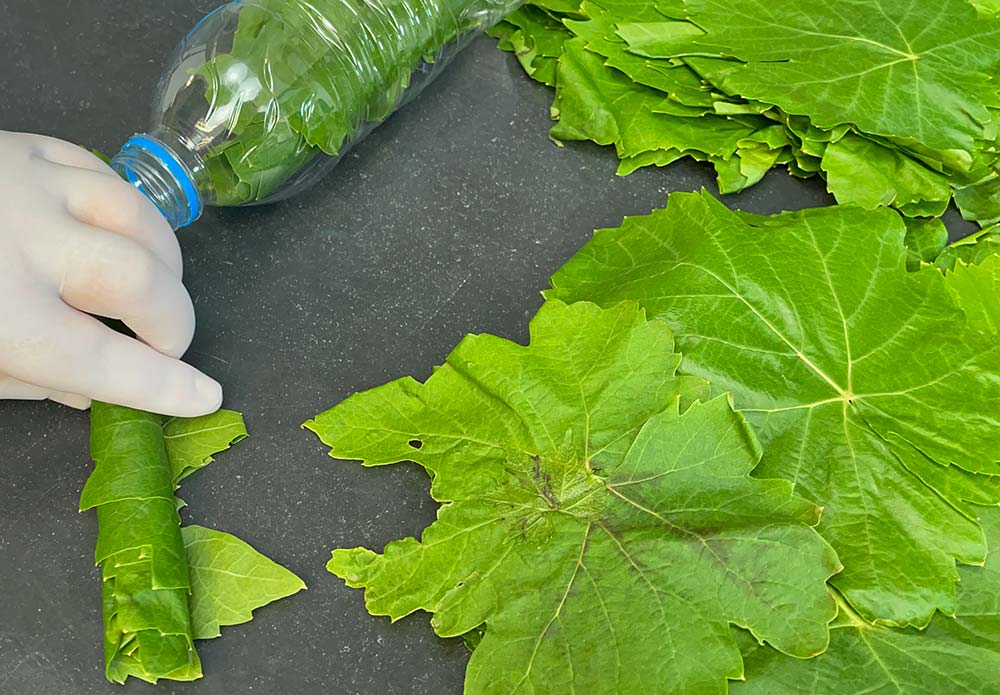
Once each bundle is inside the bottle, “push” it down with a wooden or plastic stick so the bundles are slightly compressed together and take up less space. You should use a bottle size that holds as much as you’d need for one meal, while keeping the empty space to a minimum.
Once all the vine leaves are in the bottles, press the bottle gently to release as much air as possible, then close it tightly with the cap. If you want, wrap tape around the cap to make sure no air gets in and dries out the leaves.
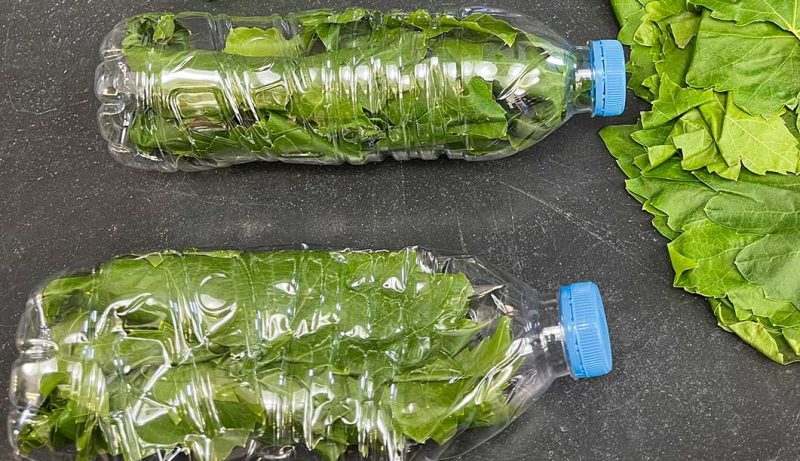
Store the bottles in a kitchen cupboard or anywhere inside or outside the house, as long as the sun doesn’t “see” them and they’re not exposed to strong light.
This way, whenever you want, you cut the bottle open with a knife and take the vine leaves from inside. They will have stayed perfectly fresh, as if you had just picked them.
2. Vine leaves in a jar
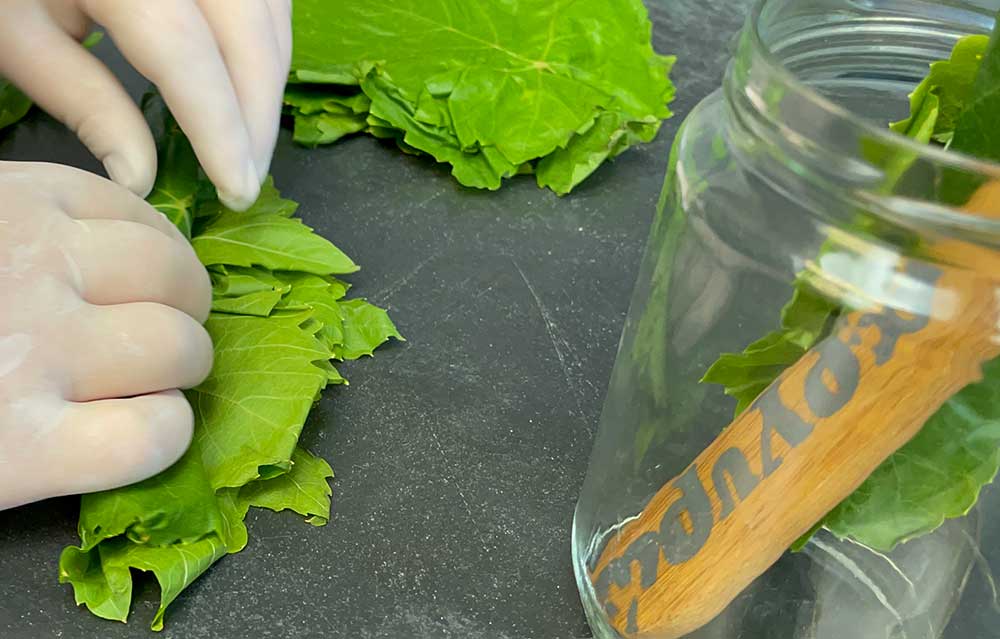
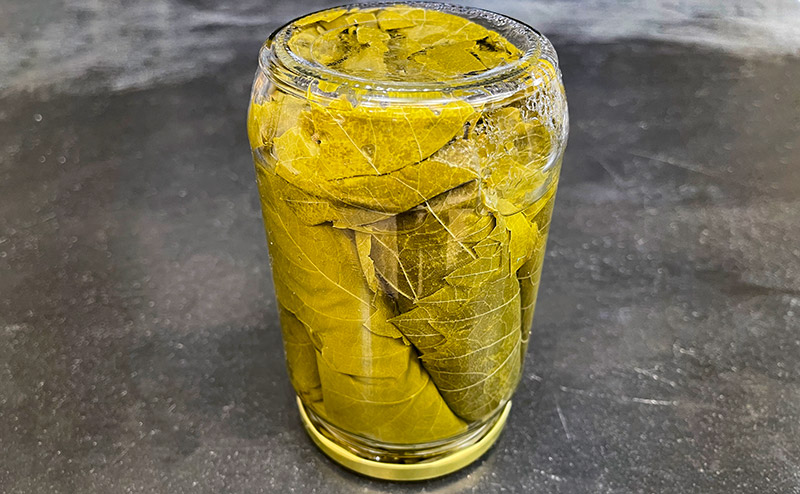
In this case, follow the steps above, again forming bundles, but this time place them inside clean glass jars, one next to the other. Each jar should be packed well. Then, add a teaspoon of citric acid (“ξινό”) if it’s a small jar, or a tablespoon for larger jars. Citric acid comes in powder form and you’ll find it at the supermarket in the spice section. Boil water in a kettle and fill the jar. Close it tightly with a new lid and turn it upside down. Leave them like that until they cool. Once the jars have cooled, they’re ready to be stored in the cupboard. Remember that when you open the jar of vine leaves to cook them, you’ll need to rinse them very well first.
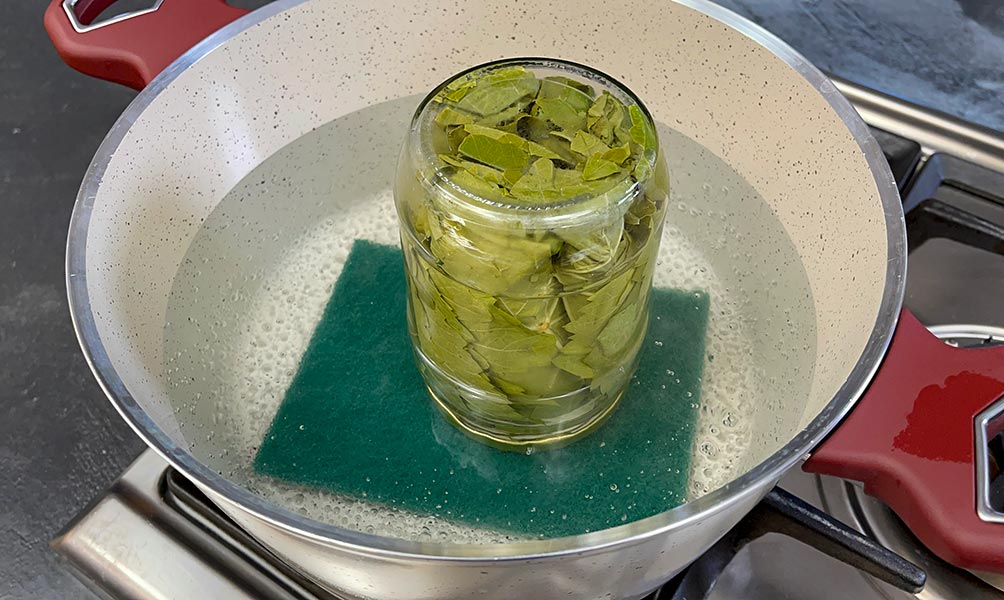
If you want, you can pasteurize the filled jars by boiling them for 20 minutes in a pot of water over low heat (not a rolling boil). Take them out of the pot and leave them upside down until they cool. After that, they’re ready to go into your cupboard and will keep for up to a year.
3. Raw vine leaves in the freezer
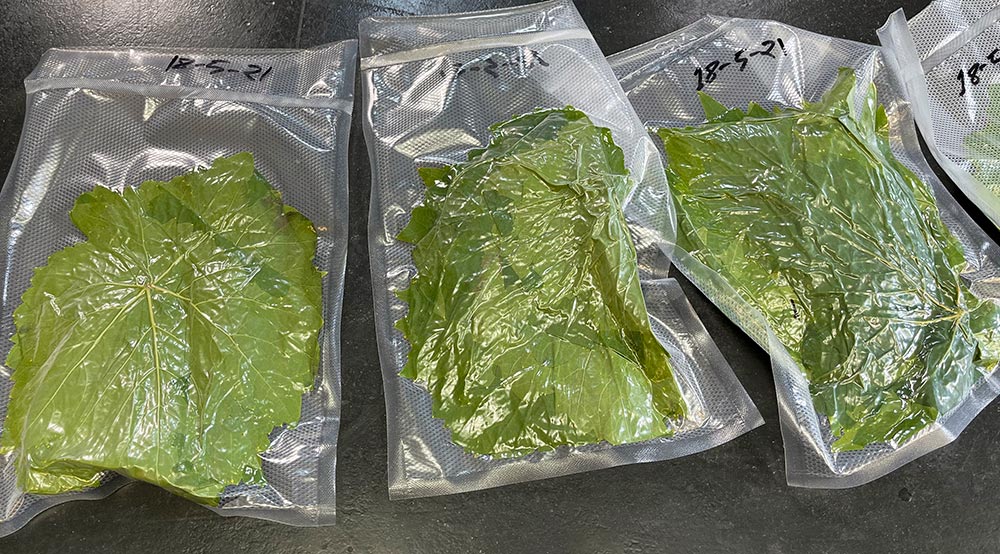
These keep for many months, as long as you’ve removed all the air from the package. Don’t wet the leaves you plan to freeze raw. Choose the most tender vine leaves and, without wetting them at all, stack them one on top of the other in piles of 10 or 15. Place them in a food bag and squeeze out all the air. Put them in the freezer and they’ll keep for many months, up to a year. Raw vine leaves in the freezer hold on to their green color. When you’re ready to cook dolmades or any other dish, open the package and submerge the still-frozen leaves into boiling water. Blanch them for about 2 minutes, until they separate. Take them out and continue with your cooking as usual.
Blanched, in the freezer
After washing them thoroughly first, stack the leaves one on top of the other. Dip the leaves in groups into boiling water for 2-3 minutes, depending on how tender they are. Lift them out into a colander and let them drain well and cool. Then wrap them either in plastic wrap or place them in food bags. The better you wrap them, the better they’ll keep in your freezer.
When you want to use them, let them thaw outside the fridge. Rinse them with tap water and they’re as good as fresh.
Watch all the methods here: